
The Science

The Science Behind Screen-Free Learning

This isn't a nostalgia pitch for glue and glitter. It's how young children build attention, language, and the confidence to work out a problem on their own, and it's the same thinking whole countries build their school systems around.

Hand control & coordination

Cutting, threading beads, fitting a tile exactly where it belongs, these small hand movements build the muscle control kids need. Later on, that shows up as neater handwriting and steadier, more precise work.

Focus & self-control

Studies on open-ended, hands-on play show real gains in self-control, planning and flexibility. A child working out how to fix a mosaic piece that won't fit is practising exactly that.

Language & attention span

Hands-on play is consistently linked to stronger language skills and longer attention spans in young children, more than the same hour spent on a screen.

Creativity & problem-solving

There's no ready-made answer on screen to tap toward. A child has to imagine the next step, try it, and adjust when it doesn't work. That's how real problem-solving gets built.

This lines up with the American Academy of Pediatrics' own guidance: no screens before 18 months, and no more than an hour a day of good-quality content for ages two to five, watched together with an adult who can help them make sense of it.

Loose Parts, and the “Hundred Languages of Children”

There's actually a name for this: loose parts theory, first described by the architect Simon Nicholson in 1971. His point was simple. Children get more inventive with open-ended materials, sand, tile, string, offcuts of wood, than with any single-purpose toy or worksheet an adult designed for them.

Our sessions build on the Reggio Emilia approach, which took that idea even further. Its founder, Loris Malaguzzi, coined the phrase the “hundred languages of children”, the idea that a child can express themselves through clay, thread or paint just as well as through words. A teacher's job, in that view, is to hand over the materials and enough trust, then step back.

That open-endedness is the whole point. A worksheet has one correct answer. A pile of mosaic tile doesn't, so a child has to look, decide, try, and often start over, which is a far richer kind of thinking than following an on-screen tutorial to an answer someone else already decided.
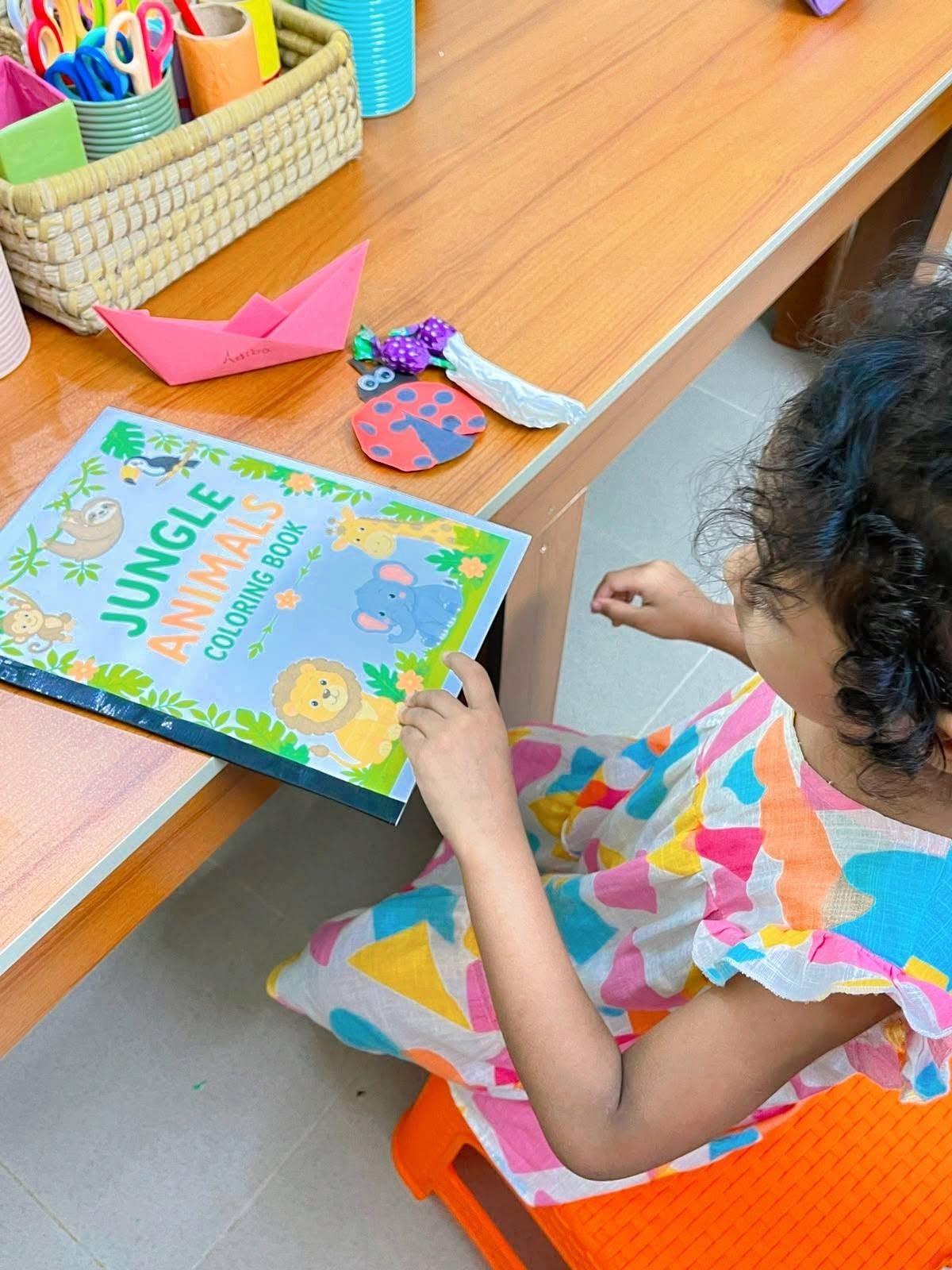
A child at a Creative Owls craft table with a coloring book and handmade paper crafts

Countries Already Teaching This Way

Screen-free, hands-on learning isn't some fringe idea. Whole countries build their school systems around some version of it, and the results are hard to argue with.

20+ Years

Finland

Finnish children don't start formal reading or maths until age seven. The years before that are built around play, not testing. Finland has stayed near the top of international school rankings for two decades running, and the UN has ranked it the world's most literate nation.

400 Years

Japan

Origami has been part of early education in Japan since the Edo period, and paper folding is recognised internationally as part of humanity's cultural heritage. It's still a core kindergarten activity today, because folding paper builds exactly the step-by-step thinking, spatial sense and hand control young children need.

Dozens of Countries

Italy, and Beyond

The Reggio Emilia approach behind our own sessions started in one Italian town after the Second World War. Schools across the US, UK, New Zealand, Australia and dozens of other countries have since adopted some version of it.

1,200+ Schools

Waldorf, Worldwide

Waldorf schools keep classrooms screen-free right through primary school, and use craft, music and movement instead. There are now more than 1,200 Waldorf schools worldwide, and the number is still growing.

We Don't Just Keep Screens Off. We Track What Replaces Them.

Plenty of craft time is screen-free. Not much of it can tell you, in plain language, what your child actually practised. Every Creative Owls session is tagged against a specific life skill, patience, focus, teamwork, following multi-step instructions, and a specific academic skill, pattern recognition, counting, colour theory, pre-writing strokes, before a single child sits down to make anything.

That's what turns "they did a craft" into a record you can actually see grow.

Questions

Frequently Asked Questions

Is screen time really that harmful for young children?

It's less about harm and more about what gets missed. Every hour on a screen is an hour not spent building hand skills, language or problem-solving through hands-on play, and that's what early childhood is really for.

Isn't some educational screen time okay?

Sure. The American Academy of Pediatrics agrees, up to an hour a day of good content for ages two to five, ideally watched with an adult. We're not against screens on principle, we just want the rest of the day filled with something just as engaging.

What if my child resists giving up screens at first?

That's completely normal, and it usually settles down after a session or two. Materials like tile or clay are genuinely absorbing once a child gets past the first few minutes, and having an adult sit down with them makes the switch a lot easier.

How is a hands-on session different from an educational app?

An app gives a child one right answer to tap toward. A pile of craft materials doesn't. The child has to look, decide, try and often redo, which is a richer kind of thinking than following an on-screen tutorial.

What age range is this approach built for?

Ages 4 to 9. That's when hand control, focus and language are developing fastest, and when hands-on play makes the biggest difference.

How do you know a session is actually building a skill, not just keeping my child busy?

Every session is tagged with a specific life skill, like patience or teamwork, and a specific academic skill, like pattern recognition or counting, before a child ever sits down. Those tags stay with the session, so you never have to guess what your child actually practised.